GPT Image 2.5 Sunburst
Create and edit images from text and image inputs. Choose Sunburst when editing precision matters most.
Read OpenAI’s Sunburst documentationTwo models, two creative priorities. Choose precise editing or fast everyday image generation.
Create and edit images from text and image inputs. Choose Sunburst when editing precision matters most.
Read OpenAI’s Sunburst documentationGenerate high-quality everyday images quickly. Flare accepts text and image inputs and produces image outputs.
Read OpenAI’s Flare documentationModel information checked against OpenAI’s official documentation on September 12, 2026.
Higgsfield AI 2.0 Beta brings cinematic video, AI image generation, camera controls, identity workflows and model selection into a director-first creative path.
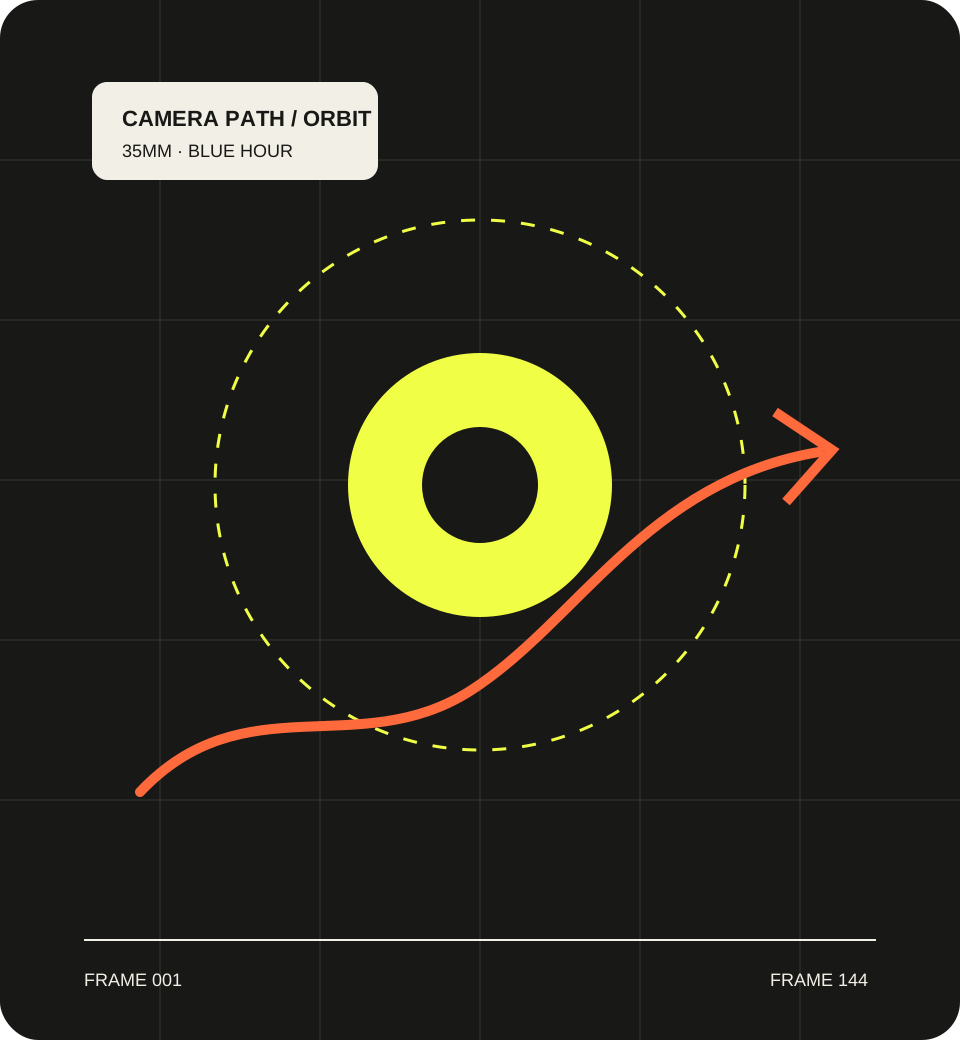
FREE CREATION STUDIO · NO SIGN-UP
Generate an image or video without leaving the homepage. Switch tools at any time; the selected generator loads in the full-height workspace below.
Loading the free image generator…
The full creative workspace will appear here.The official Higgsfield experience combines image, video, editing, identity, and multiple model families. This guide organizes that creative surface around repeatable production stages, from the first frame to final approval.
Approve composition and identity before motion.
Choose a model for the shot's bottleneck.
Turn lens, movement, and light into controls.
Review continuity, physics, rights, and sound.
A director-focused introduction to Krea 2 for moodboards, visual language, anchor frames, and controlled image-to-video preparation.
Open model guide →MODEL GUIDE / 02A shot-planning guide to Wan 3.0 text-to-video, image-to-video, and reference-to-video workflows.
Open model guide →MODEL GUIDE / 03A production note for Seedance 2.5 long-form generation, flexible references, editing, and extension.
Open model guide →MODEL GUIDE / 04A practical image-generation and editing guide for layouts, text, references, and video-ready keyframes.
Open model guide →MODEL GUIDE / 05A cinematic test plan for MiniMax H3 text, image, and reference-to-video with native stereo audio.
Open model guide →MODEL GUIDE / 06An independent introduction to Cinema Studio 4.0, director controls, use cases, limitations, and shot planning.
Open model guide →MODEL GUIDE / 07A sourced guide to multimodal references, native sound workflow, limitations, and prompt planning.
Open model guide →MODEL GUIDE / 08An independent Kling 3.0 overview covering subject motion, multi-shot planning, limitations, and comparison.
Open model guide →MODEL GUIDE / 09A practical introduction to Soul ID for recurring character identity, reference preparation, responsible use, and checks.
Open model guide →A still frame is a production gate. Approve identity, composition, product geometry, typography, and light before using credits to animate a broken direction.
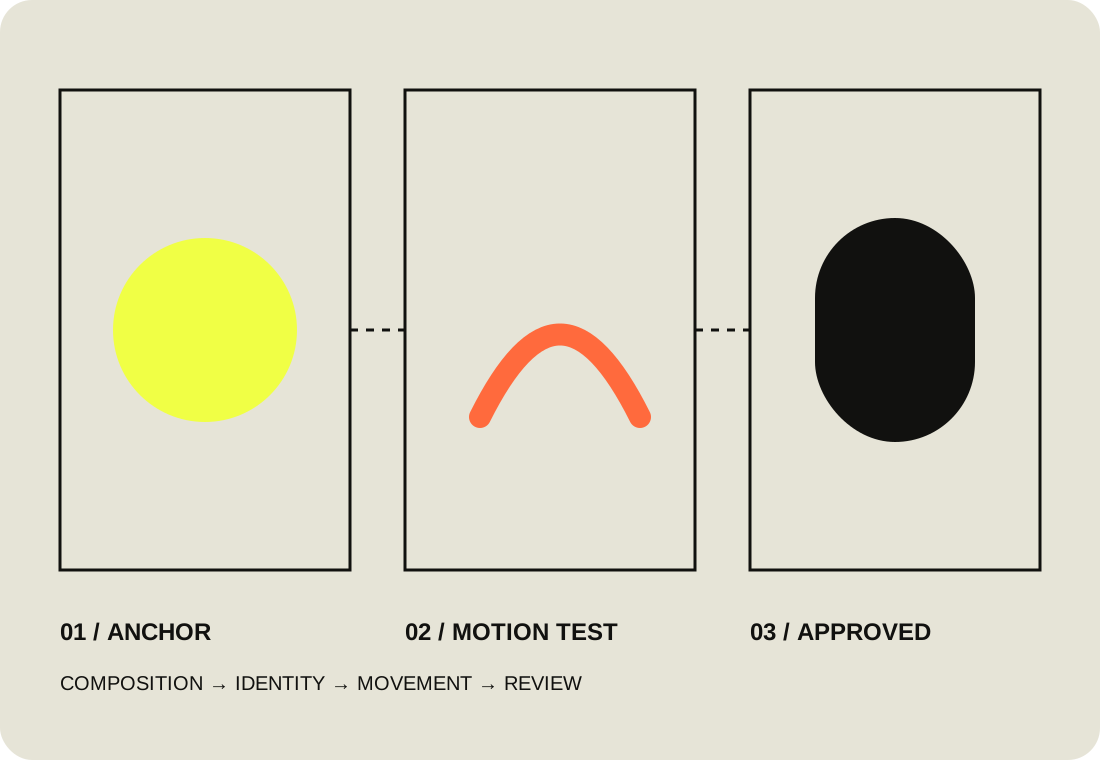
A practical 2026 workflow for combining camera controls, references, model routing, and human review.
Read article →2026-08-22 · 7 minHow lens, motion, references, and evaluation can make AI video direction more explicit.
Read article →For Higgsfield-specific features, visit the official Higgsfield website.
FEATURES & WORKFLOWS
Start with the brand feature you need—Cinema Studio 4.0, Genjutsu or MCP—then open the guide that explains camera language, references and review gates.
Worth for multi-model cinematic experiments; verify unlimited/credit fine print.
Open the relevant guide →A source-linked definition of Higgsfield as a director-first AI cinematic suite with Cinema Studio and Genjutsu.
Open the relevant guide →Review the 12 August 2026 update: 30-second clips, 50 references and camera-led controls.
Open the relevant guide →Treat Genjutsu as a 4.0 effect/control path and score identity before stylization.
Open the relevant guide →Connect compatible AI workflows to Higgsfield tools—with a shot card and narrow permissions.
Open the relevant guide →Long-form 2026-09-17 director notes on MCP, Cinema Studio continuity and Genjutsu discipline.
Open the relevant guide →Deep dive on 30s clips, reference ledgers, Genjutsu and a director scorecard.
Open the relevant guide →Compare credits, included tools, model access and renewal terms against the current official plan page.
Open the relevant guide →Turn camera, lens, references and movement into a testable shot card before spending credits.
Open the relevant guide →Plan cinematic camera movement, subject action and shot continuity before spending high-quality generations.
Open the relevant guide →Convert a creative brief into shot purpose, camera motion, continuity constraints and review gates.
Open the relevant guide →POPULAR QUESTIONS
Worth for multi-model cinematic experiments; verify unlimited/credit fine print.
Read the supporting page →Higgsfield is positioned as an AI-native creative suite with image and video generation, including camera-led Cinema Studio workflows. Confirm modules on the official site.
Read the supporting page →Cinema Studio 4.0 is Higgsfield’s 12 August 2026 director layer, described with longer clips, more references and Genjutsu. Verify live limits on higgsfield.ai.
Read the supporting page →Cinema Studio is Higgsfield’s director-oriented control layer for camera, lens, lighting, references and movement. Confirm live controls and plan access on the official site.
Read the supporting page →Genjutsu is named in the Cinema Studio 4.0 cycle as a creative control/effect path. Confirm the live UI before treating it as a production feature.
Read the supporting page →The official MCP offering connects compatible AI workflows to Higgsfield tools. Review official setup and permission guidance before enabling it.
Read the supporting page →Availability and promotional credits can change. Check the official pricing page for current limits and paid-plan requirements.
Read the supporting page →Product features, model access and plan limits can change. Confirm time-sensitive details on the official provider website before starting paid work. Brand names belong to their respective owners. This site is an independent guide and is not affiliated with Higgsfield.
EXPANDED AI MODEL LIBRARY · AUGUST 2026
Detailed introductions to AI image generation, AI video generator and image-to-video systems, with a dedicated guide for every model.
Cinematic text-to-video, image-to-video and video editing with native synchronized audio.
Open model guide →MiniMax · AI video generatorOpen-weights audiovisual generation with text, first/last frames and multimodal references.
Open model guide →Alibaba · AI video generatorLonger multimodal video generation with flexible duration, references, audio and continuity controls.
Open model guide →Black Forest Labs · Multimodal generatorEarly-access multimodal model direction spanning video, image, synchronized audio and action prediction.
Open model guide →Krea · AI image generatorAesthetic image foundation model designed for expressive generation and creative control.
Open model guide →Alibaba Qwen · AI image generatorCurrent Qwen image family for prompt-led generation, editing and visually precise iteration.
Open model guide →ByteDance Seed · AI image generatorByteDance Seed's July 2026 image model for stronger image-text alignment, structural coherence, text rendering, visual aesthetics, and complex information visualization.
Open model guide →ByteDance · AI image generatorProduction image generation and editing model for detailed prompts and controlled visual revisions.
Open model guide →ByteDance · AI image generatorEarlier Seedream image model useful for comparing prompt interpretation, style and editing progress across releases.
Open model guide →OpenAI · AI image generatorNatural-language image generation and multi-reference editing for precise creative revision.
Open model guide →Google · AI image generatorFast Gemini image generation and editing with high-resolution output and localization features.
Open model guide →Google · AI image generatorHigher-detail Gemini image route focused on 4K-capable generation and editing.
Open model guide →Higgsfield AI · CREATIVE WORKFLOW
A cinematic AI video prompt works best when the camera has a reason to move. In a night-train scene, a slow move toward an empty seat can reveal anticipation, while a lateral track can emphasize passing light and repetition. Choose the emotional purpose before selecting a dramatic camera effect.
Prepare a source frame with readable depth, a stable focal subject and enough room for the proposed motion. State the subject action separately from camera movement, then review the beginning, middle and end of the generated clip. Windows, door frames and recurring light sources provide concrete continuity checks.
Specify the starting framing, direction and pace of camera movement, the main subject action and the intended final composition. Avoid stacking incompatible camera moves.
Watch it at normal speed, then inspect subject identity, repeated geometry, lighting and motion through time. An attractive opening frame is only one part of a usable shot.
THE CREATIVE NOTEBOOK
Explore a focused tutorial, a practical prompt guide and a real-world planning exercise. Each guide includes an original brief and a checklist for reviewing your result.
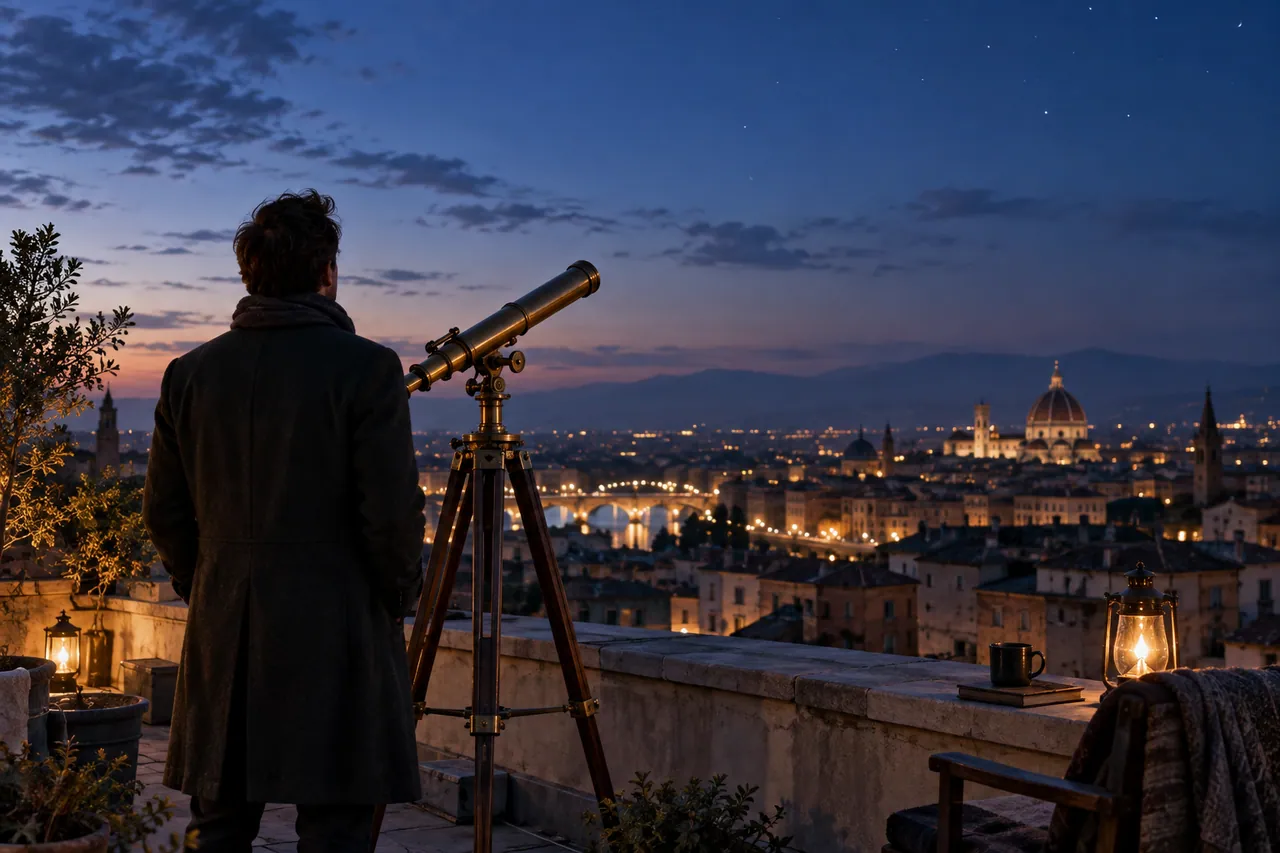
NEW CREATIVE GUIDE
A rooftop observatory sequence: explore two original concept images, prompts and a practical production brief.
Explore the Higgsfield AI creative guide →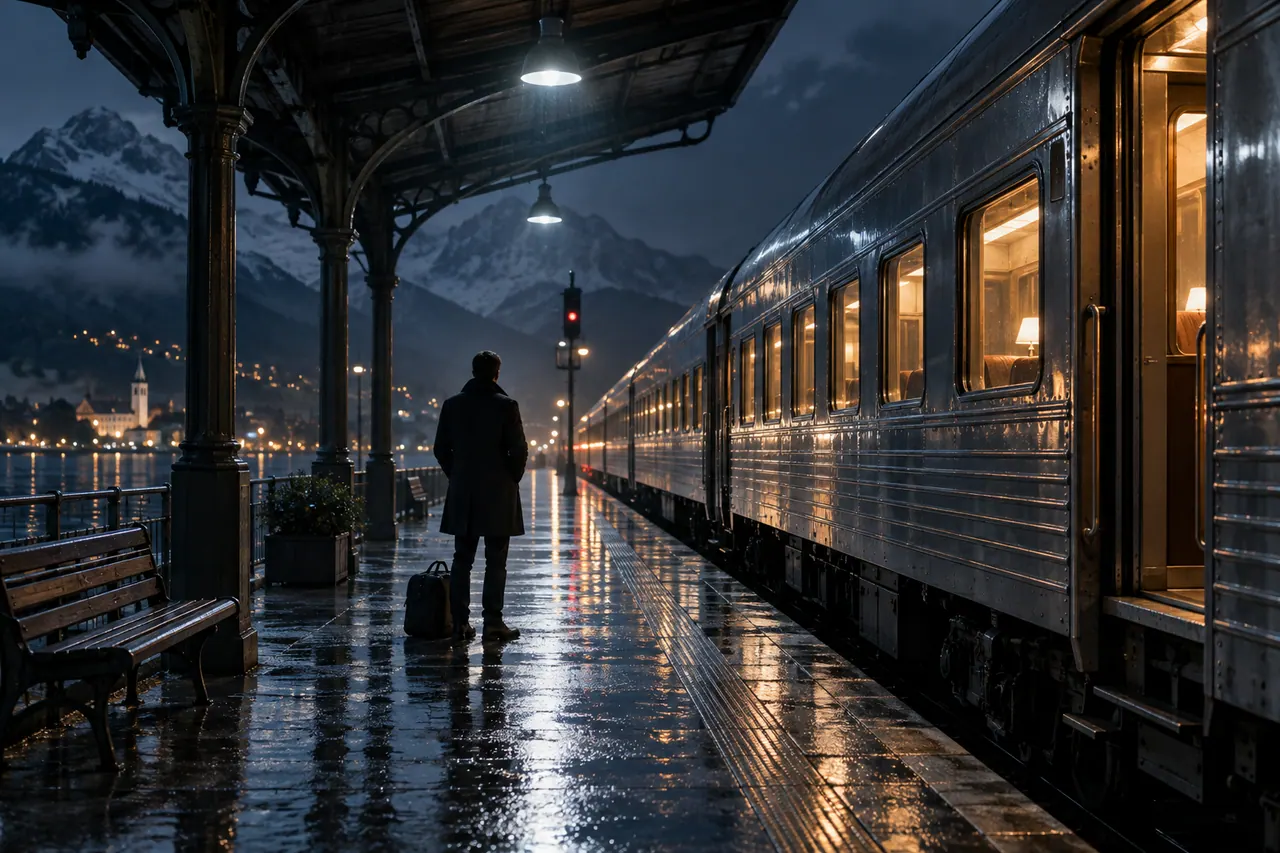
NEW IN THE JOURNAL
Explore a Higgsfield AI cinematic workflow through a fictional night-train sequence, from shot design and camera prompts to continuity and editing.
Read the complete guide →